Overview
My work focuses on improving accessibility and engagement through technology, particularly for people with low vision. I work at the intersection of accessibility, human-computer interaction, mixed reality, computer vision, and digital heritage.
My projects are developed through close collaboration with users, cultural organisations, and researchers from multiple disciplines, with a strong emphasis on real-world impact.
ARtSee: Enhancing Visual Art Through Augmented Reality
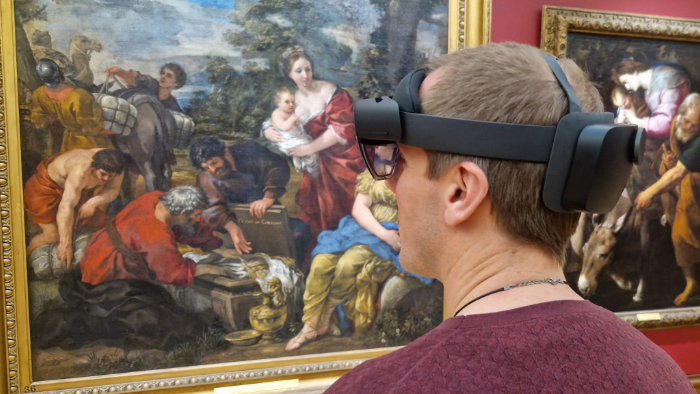
Museums and galleries can present challenges for people with low vision, particularly when viewing fine detail, colour, contrast, scale, and texture within artworks. My PhD research investigated how technology can help people make better use of their remaining sight when engaging with visual art.
The project began with a series of focus groups involving people with low vision. Rather than starting with a technology solution, the goal was to understand the lived experience of visiting museums and galleries, identify barriers to engagement, and explore what an effective solution might look like. These findings were published at the ACM Designing Interactive Systems Conference (DIS 2024).
Building on this work, I developed ARtSee, an augmented reality system for Microsoft HoloLens 2 that provides real-time visual enhancements including magnification, contrast enhancement, edge highlighting, colour modifications, image sharpening, and high-resolution artwork overlays. The system has been developed and evaluated in collaboration with people with low vision and cultural partners including Bristol Museum and Art Gallery.
The final stage took the feedback and learnings from the earlier stages and informed a complete redevelopment of the system. Moving to the Magic Leap 2, I incorporated audio descriptions and a range of interaction methods designed to evaluate the ways people with low vision want to interact with ARtSee in a museum.
This project has two publications so far, including Designing Interactive Systems Conference (DIS ’24) and the Sight Support West magazine, Visible:
Paul Goddard. 2026. Smart glasses bring art into focus for people with low vision. Visible Winter/Spring 2026. Sight Support West of England. Available at: https://www.sightsupportwest.org.uk/services/visible-magazine/13-winter-2026/
pdf
Paul Goddard, Nervo Verdezoto, Tom H. Margrain, Yu-Kun Lai, and Parisa Eslambolchilar. 2024. Seeing Art Differently: Design Considerations to Improve Visual Art Engagement for People with Low Vision. In Designing Interactive Systems Conference (DIS ’24), July 1–5, 2024, IT University of Copenhagen, Denmark. ACM, New York, NY, USA, 13 pages. https://doi.org/10.1145/3643834.3660675
pdf | summary
PlayShell
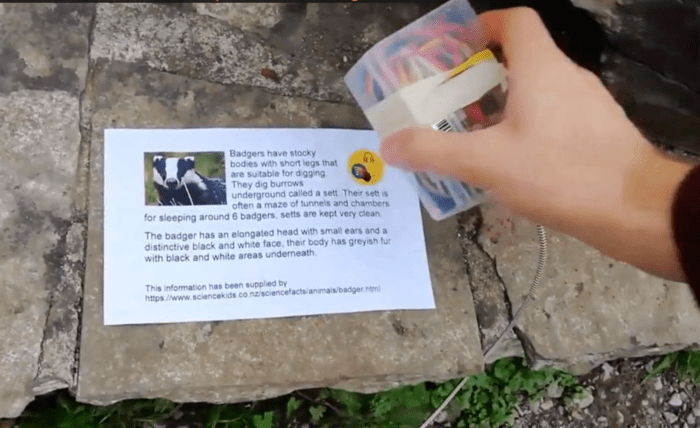
PlayShell explored how low-cost technology could be used to create engaging audio experiences within museums and heritage sites. The system allowed visitors to trigger location-specific audio content through simple physical interactions, providing an affordable and flexible alternative to traditional guide systems.
The project was published at the International Conference on Audio Mostly in 2020:
Goddard, P. and Gaster, B.R. 2020. PlayShell: a low-cost, fun audio experience for heritage centres. In: Proceedings of the 15th International Conference on Audio Mostly. Graz Austria: ACM, pp. 237–240. DOI: 10.1145/3411109.3411132
pdf | video
Tactile and Digital Wayfinding
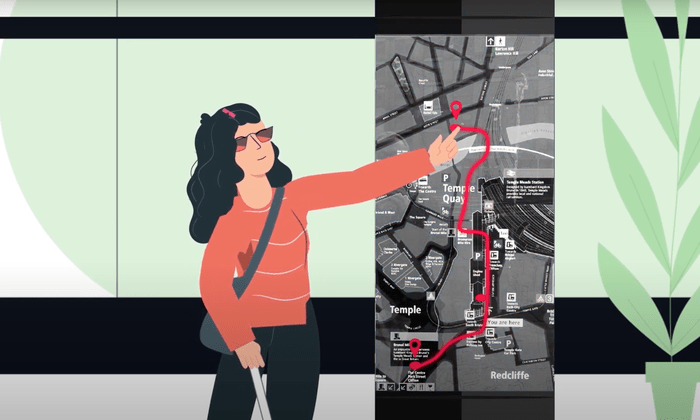
Working with researchers from the Centre for Print Research at UWE Bristol, I contributed to projects exploring tactile and digitally enhanced navigation systems for people with low vision. This interdisciplinary work combined accessibility research, design, architecture, printmaking, and digital technology to investigate new approaches to navigation and spatial understanding.
This work contributed to publications on tactile cities, navigation, and visual sensory perception, and reinforced my interest in co-designing technology with the people who will ultimately use it:
D’Agnano, F., Parraman, C., Goddard, P., and Roberton, N. 2021. Urban Lighthouses and a Tactile City - Bristol. In: AMPS Proceedings Series 26.2. Environments by Design: Health, Wellbeing and Place. Northumbria, UK. pp. 110-121.
pdf
Parraman, C., Mandrille, C., D’Agnano, F., Roberton, N., and Goddard, P. 2021. The Engaged Surface - Prints for Visual Sensory Perception. In: IMPACT 11. Hong Kong
online
Future Directions
My current and future interests include:
- Accessibility and inclusive design
- Digital heritage and museum technologies
- Augmented and mixed reality
- Emerging technologies
- Human-computer interaction
- Computer vision
- Multimodal accessibility
- Participatory design
Interested in working together?
See the collaborate page for opportunities to partner on research, accessibility initiatives, funding applications, and how to arrange for students to take on your projects.