Overview
Museums and art galleries offer opportunities for learning, social interaction, and cultural engagement. However, these spaces can present barriers for people with low vision, particularly when perceiving fine detail, colour, contrast, scale, and lighting.
My research explores how people with low vision can use their remaining sight more effectively when engaging with visual media such as art. Through focus groups, I identified key visual challenges and a strong preference for approaches that support visual engagement rather than replacing it with non-visual alternatives.
To address this, I developed ARtSee: an augmented reality system that provides, real-time visual enhancements, including magnification, contrast adjustment, colour modification, and edge highlighting. The system is designed to be flexible and user-controlled, supporting a range of visual needs.
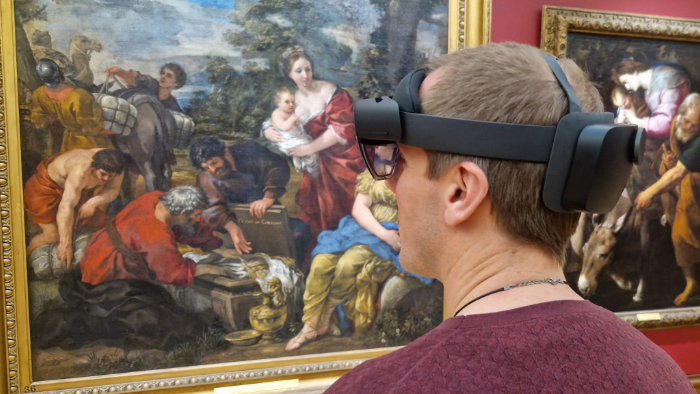
People with low vision have evaluated ARtSee at Bristol Museum and Art Gallery. Early findings indicate that these enhancements can help people perceive more detail and engage more fully with artworks.
This work contributes to more inclusive museum experiences and provides practical insights for the design of accessible augmented reality systems.
Previous Research
Prior to ARtSee, I investigated low-cost audio headset systems for cultural spaces. These systems allowed curators to create descriptions that are automatically triggered through contactless interaction. I also contributed to research on tactile and digital wayfinding systems for people with low vision.
This work was conducted in collaboration with Dr Benedict Gaster, Professor Carinna Parraman, and Fabio D’Agnano.
Collaboration
I welcome collaboration with researchers, museums, and industry partners working on accessibility, AR, and cultural technology.
Contact: paul3.goddard@uwe.ac.uk
Publications
| 2026 | 2024 | 2021 | 2020 |
2026
Paul Goddard. 2026. Smart glasses bring art into focus for people with low vision. Visible Winter/Spring 2026. Sight Support West of England. Available at: https://www.sightsupportwest.org.uk/services/visible-magazine/13-winter-2026/
pdf
2024
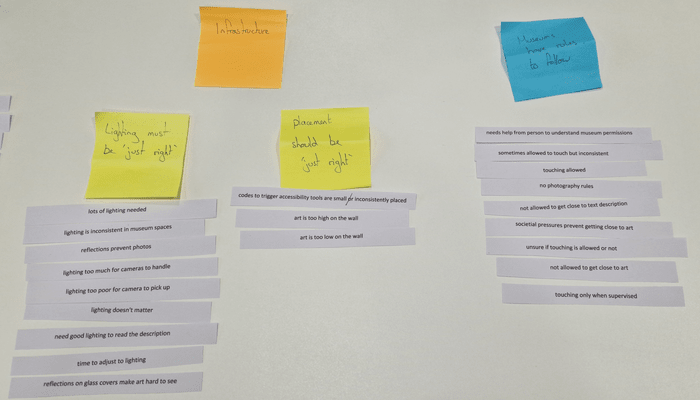 Paul Goddard, Nervo Verdezoto, Tom H. Margrain, Yu-Kun Lai, and Parisa Eslambolchilar. 2024. Seeing Art Differently: Design Considerations to Improve Visual Art Engagement for People with Low Vision. In Designing Interactive Systems Conference (DIS ’24), July 1–5, 2024, IT University of Copenhagen, Denmark. ACM, New York, NY, USA, 13 pages. https://doi.org/10.1145/3643834.3660675
pdf | summary
2021
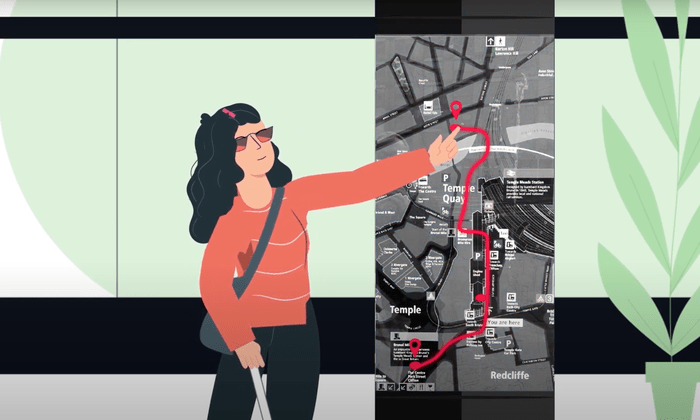 D’Agnano, F., Parraman, C., Goddard, P., and Roberton, N. 2021. Urban Lighthouses and a Tactile City - Bristol. In: AMPS Proceedings Series 26.2. Environments by Design: Health, Wellbeing and Place. Northumbria, UK. pp. 110-121.
pdf
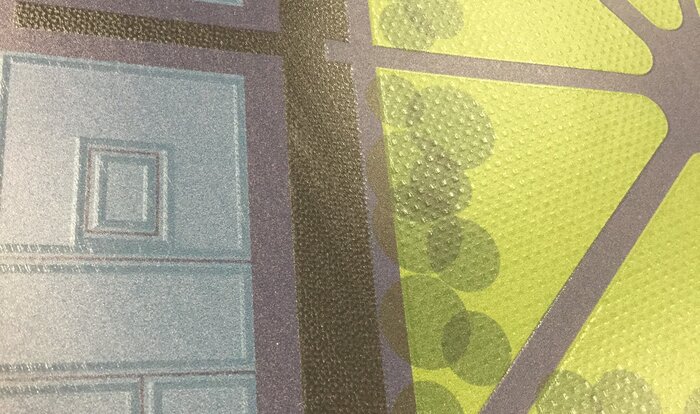 Parraman, C., Mandrille, C., D’Agnano, F., Roberton, N., and Goddard, P. 2021. The Engaged Surface - Prints for Visual Sensory Perception. In: IMPACT 11. Hong Kong
online
2020
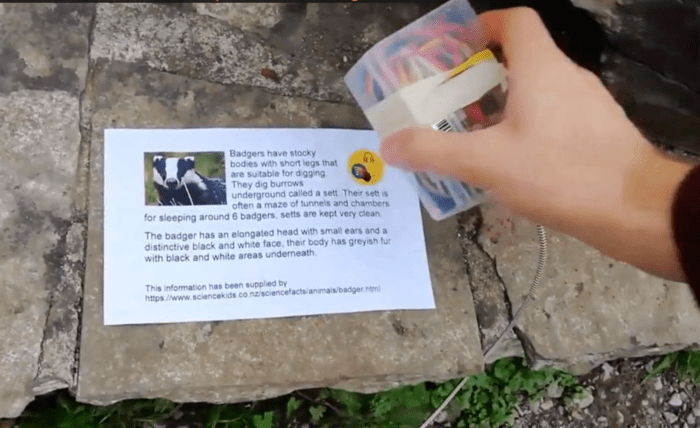 Goddard, P. and Gaster, B.R. 2020. PlayShell: a low-cost, fun audio experience for heritage centres. In: Proceedings of the 15th International Conference on Audio Mostly. Graz Austria: ACM, pp. 237–240. DOI: 10.1145/3411109.3411132
pdf | video